HC refuses to quash murder charge in Reasi assault case, says issues must be tested at trial



19/04/2026
Jammu, Apr 18: The High Court of Jammu & Kashmir and Ladakh has declined to quash murder charges against a Reasi resident accused of fatally assaulting a man with a wooden stick, holding that the issues raised by the accused involve disputed facts that can only be adjudicated during trial.
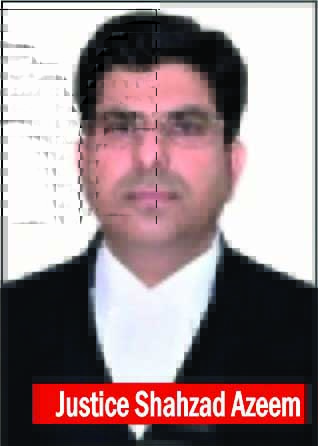
Dismissing a petition filed by Manga Ram, Justice Shahzad Azeemup held an order of a trial court framing charges under Sections 302 (murder) and 341 (wrongful restraint) of the IPC in connection with FIR No. 255/2022 registered at Reasi police station. The petitioner had invoked the court's inherent jurisdiction seeking quashment of the trial court's January 31, 2024 order, arguing that the allegations, even if accepted at face value, did not constitute the offence of murder.
According to the prosecution, the accused allegedly assaulted Deepak Kumar on October 6, 2022, while the latter was returning home from Reasi market. The victim sustained serious head injuries after being hit with a wooden stick and was initially admitted to a local hospital before being referred to Government Medical College, Jammu, where he later died on January 15, 2023.
The FIR was initially registered under minor offences, but as the victim's condition deteriorated, more serious charges were added during investigation, culminating in the filing of a charge sheet under Section 302 IPC.
Counsel for the petitioner contended that there was no intention to kill, and that the injuries allegedly inflicted were not sufficient in the ordinary course of nature to cause death. It was further argued that medical evidence did not conclusively link the death to the injuries, suggesting instead that the cause of death-"recurrent acute on chronic subdural hematoma with complications"-could have resulted from other factors.
Opposing the plea, the prosecution submitted that the High Court's powers under Section 482 of the CrPC are limited and cannot be used to assess evidence or adjudicate disputed factual issues at the pre-trial stage.
Agreeing with the prosecution, the court observed that the scope of interference at the stage of framing charges is narrow and does not permit a detailed evaluation of evidence.
"The pleas raised by the petitioner fall within the realm of triable issues," the court said, adding that the High Court cannot conduct a "mini trial" or re-appreciate evidence while exercising inherent jurisdiction.
The court noted that two key witnesses examined so far had supported the prosecution case and that the medical opinion prima facie indicated a causal link between the assault and the death.
It also rejected the argument regarding absence of intent, observing that intention or knowledge is to be inferred from the overall circumstances, including the nature of the assault, the part of the body targeted, and the weapon used. Highlighting the role of the investigating agency, the court said that the sections mentioned in an FIR are not final and can be altered based on evidence collected during investigation.
"The final charge sheet reflects the conclusion of the investigating officer after full investigation and is not bound by the initial version in the FIR," the court observed. Finding no illegality or infirmity in the trial court's order, the High Court dismissed the petition, paving the way for the trial to proceed.
"The jurisdiction of this court cannot be converted into appellate or revisional jurisdiction at this stage," it said, concluding that no ground was made out for quashing the charges.
Share This Story |
|
Comment On This Story |
|
|
|
|