HC rejects bail to Shopian man in Hizbul terror conspiracy case, slams ‘forum shopping’



13/05/2026
JAMMU, May 12: The High Court of Jammu & Kashmir and Ladakh has dismissed the bail appeal of a Shopian resident accused in a Hizbul Mujahideen-linked terror conspiracy case, observing that the restrictions on bail under the Unlawful Activities (Prevention) Act are "severely restrictive" and taking strong exception to what it termed as "forum shopping" by the appellant.
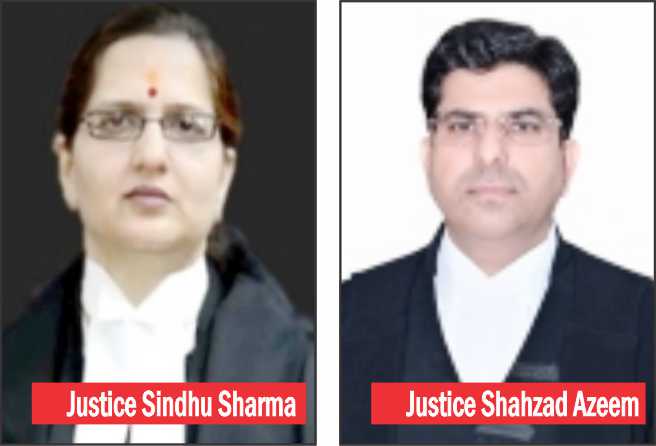
A division bench of Justice Sindhu Sharma and Justice Shahzad Azeem upheld the April 22, 2025 order of the Special Judge, NIA Cases, Jammu, rejecting the bail plea of Syed Irfan Ahmad of Nazneenpora, Keegam, Shopian.
The appellant, arrayed as accused No. 6, is facing trial along with 10 co-accused in a conspiracy case linked to the banned outfit Hizbul Mujahideen. He has been charge-sheeted under various provisions of the IPC and Sections 17, 18, 19, 38, 39 and 40 of the UAPA.
According to the prosecution, the accused persons were allegedly involved in a larger conspiracy relating to terror funding, procurement of arms and ammunition and facilitating militant movement for waging war against India. The prosecution alleged that the appellant acted as an intermediary between co-accused persons, including militants and a police officer posted in the Anti-Hijacking Unit.
The High Court observed that prima facie material collected during investigation indicated that the appellant allegedly facilitated the movement of militants, including his brother who was stated to be a district commander of Hizbul Mujahideen, from Shopian to Jammu in February 2019 for ex-filtration to Pakistan.
The bench also referred to allegations relating to transfer of funds, call detail records and communication links between the appellant and co-accused persons.
Counsel for the appellant argued that there was no direct incriminating evidence against his client and submitted that several prosecution witnesses had not supported the allegations. It was also argued that the appellant was a government employee, a PhD scholar and had a clean antecedent.
Opposing the appeal, the National Investigation Agency relied upon the statutory bar under Section 43-D(5) of the UAPA.
The court observed that once charges had been framed on the basis of material collected during investigation, the rigours of Section 43-D(5) stood attracted and the court at the bail stage was not expected to undertake a detailed examination of evidence or conduct a mini-trial.
Rejecting the argument of delay in trial, the bench referred to Supreme Court judgments including Gurwinder Singh vs State of Punjab, NIA vs Zahoor Ahmad Shah Watali and Union of India vs Barakathullah, reiterating that the principle of "bail is the rule, jail is the exception" does not apply with the same force in UAPA cases.
The court also took note of the appellant moving another application before the trial court seeking similar relief on health grounds during pendency of the appeal before the High Court and termed the conduct as "abuse of the process of the Court and forum shopping."
The bench observed that the appellant had sought discretionary relief through concealment or misstatement of facts and noted that the medical report placed before the court did not indicate any major surgical requirement.
Holding that the material on record prima facie disclosed the appellant's alleged role as an intermediary in the conspiracy, the court said the allegations could be assessed by piecing together phone records, money trail, meetings and evidence relating to co-conspirators and witnesses yet to be examined.
The court held that grant of bail at this stage would be premature and unwarranted and accordingly dismissed the appeal.
Share This Story |
|
Comment On This Story |
|
|
|
|