Private schools bound to use JKBOSE-prescribed textbooks, rules High Court



07/06/2026
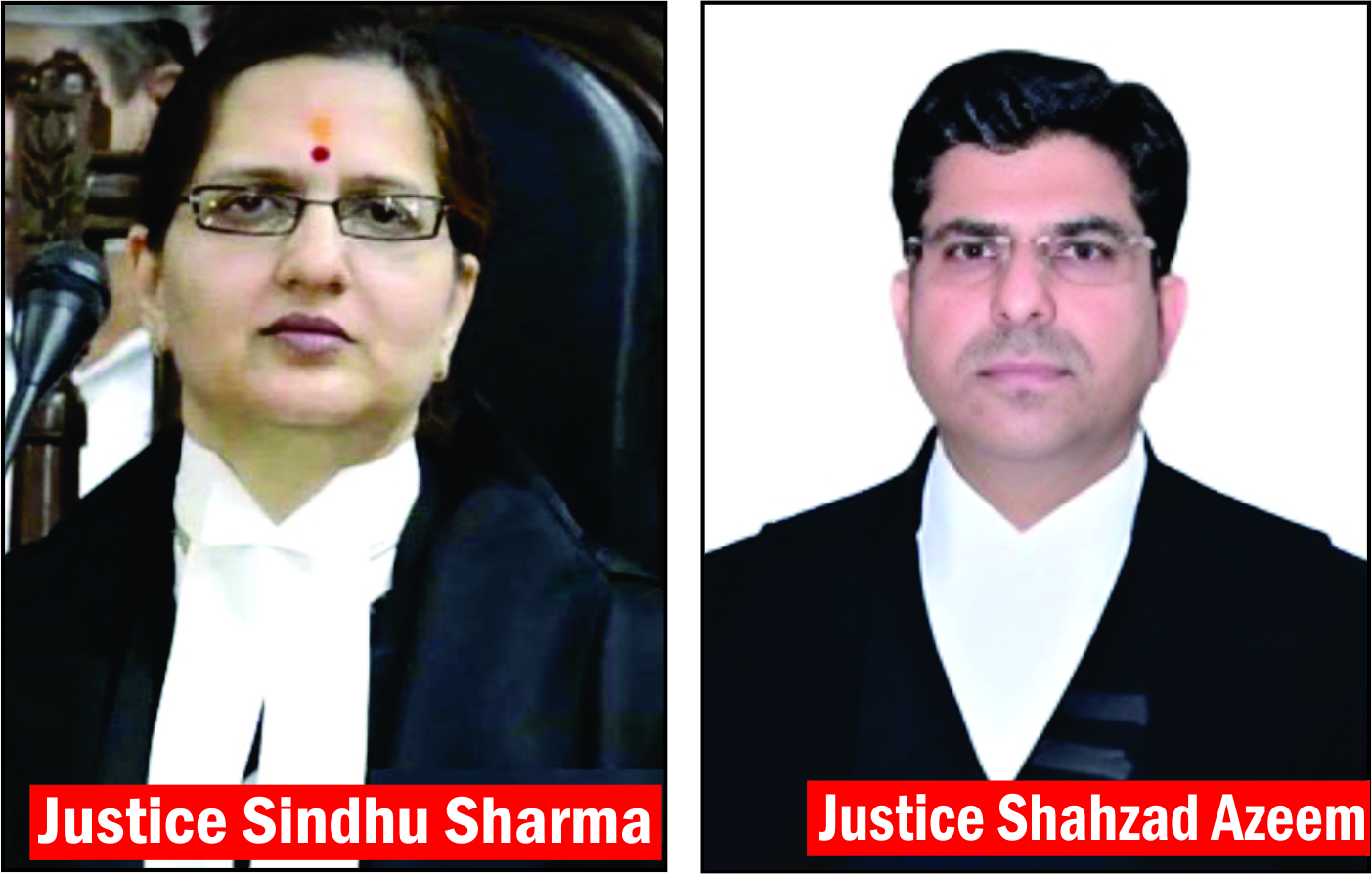
JAMMU, Jun 6: The High Court of Jammu and Kashmir and Ladakh has upheld the authority of the Jammu and Kashmir Board of School Education to prescribe textbooks for affiliated private schools, ruling that institutions cannot adopt a parallel textbook system contrary to the Board's directions.
A Division Bench comprising Justice Sindhu Sharma and Justice Shahzad Azeem dismissed a Letters Patent Appeal filed by the J&K Private Schools United Front and affirmed an earlier judgment of a Single Judge upholding JKBOSE directions mandating Board-published textbooks for Classes VI to VIII in affiliated private schools.
The dispute arose after JKBOSE issued notifications directing private schools across the Union Territory to adopt only Board-published textbooks for Classes VI to VIII. The Board had also issued communications to ensure implementation of the prescribed curriculum amid complaints that some schools were allegedly compelling parents and students to purchase books from private publishers in place of, or in addition to, JKBOSE textbooks.
The appellants argued that while the Board had the authority to prescribe syllabi and textbooks, it could not compel schools to use only books published by JKBOSE. They contended that such a restriction deprived schools, parents and students of the choice to use books considered to be of better quality.
Rejecting the contention, the Division Bench held that once an institution voluntarily seeks and obtains affiliation from JKBOSE, it is bound by the terms and conditions of that affiliation, including compliance with the curriculum, syllabi and textbooks prescribed by the Board.
The court observed that the power to prescribe textbooks inherently includes the authority to determine which books are to be used in affiliated schools. It held that the fact that the Board itself publishes the prescribed textbooks does not render the decision arbitrary or beyond its powers, provided it is supported by law and educational policy considerations.
The Bench further held that regulation of education, including prescription of curriculum and textbooks, constitutes a valid and reasonable restriction aimed at maintaining academic standards and ensuring uniformity in educational content across the Union Territory.
The court also observed that the JKBOSE notifications and circulars were general directions applicable uniformly to all affiliated institutions and could not be termed arbitrary or violative of Article 14 of the Constitution.
Emphasising judicial restraint in matters of educational policy, the Bench said such issues primarily fall within the domain of expert and regulatory bodies and that courts should interfere only when a policy is manifestly arbitrary, unreasonable or contrary to statute.
Finding no infirmity in the judgment of the Single Judge, the Division Bench dismissed the appeal and upheld the JKBOSE textbook mandate.
Advocate Shakeel Sarwar Wani, assisted by Advocate Imbisaat Liyaqat, appeared for the appellants, while Advocate M.I. Dar, along with Advocates Sana Imam and Laila Khan, represented the respondents.
The ruling is expected to strengthen the uniform textbook policy in schools affiliated with JKBOSE and may help curb the practice of prescribing additional or unapproved books from private publishers.
Share This Story |
|
Comment On This Story |
|
|
|
|