Govt cannot retain private land without compensation, rent: DB



15/10/2026
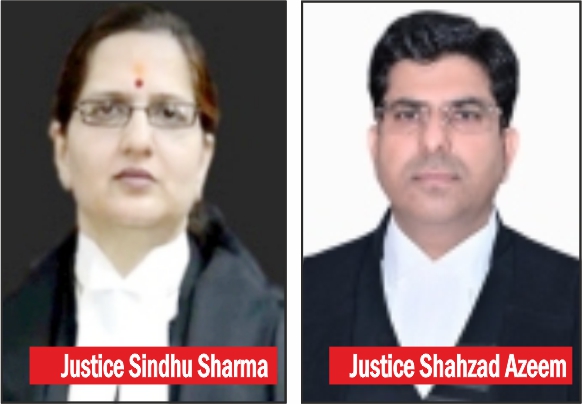
JAMMU, Oct 14: The High Court of Jammu and Kashmir and Ladakh has held that the government cannot retain private land and use it for public purposes without following due process of law and paying appropriate compens-ation and rent to the landowner.
A Division Bench comprising Justice Sindhu Sharma and Justice Shahzad Azeem dismissed an appeal filed by the Union Territory administration and upheld a Single Bench judgment directing payment of compensation to a Rajouri resident whose land was used for constructing a Panchayat Ghar without compensation.
The case concerns two kanals of land under Khasra No. 287 at Village Udhan in Kotranka tehsil of Rajouri district, belonging to Parkash Chand, son of Nika Ram. The landowner had approached the High Court alleging that the Rural Development Department took possession of his land in 2004 for construction of a Panchayat Ghar on the assurance that he would be employed as a Chowkidar. He claimed that the promised employment was never provided and that agriculture was his primary source of livelihood.
The administration contended that Chand had voluntarily donated the land in the presence of the then Sarpanch and local residents. It also disputed the claim that any assurance of employment created a binding obligation on the authorities.
The Single Bench, in its judgment dated August 9, 2023, rejected the government's contention, observing that the authorities had failed to establish a valid voluntary donation of the land.
It directed the administration to pay appropriate compensation within three months, failing which the land was to be vacated. The authorities were also directed to pay rent from the date of taking possession until payment of compensation.
Challenging the decision, the administration argued that the land had been voluntarily donated and that the writ petition, filed in 2010, was barred by delay and laches.
Rejecting these submissions, the Division Bench observed that the government had failed to produce convincing evidence of a valid and unconditional transfer of the land. A mere assertion of voluntary donation, without supporting material establishing a lawful transfer, could not defeat the landowner's claim, it held.
The Bench referred to the Supreme Court judgment in Vidya Devi v. State of Himachal Pradesh, observing that delay and laches would not necessarily defeat a claim where deprivation of private property without due process constituted a continuing cause of action.
It also relied on Chuni Lal Bhagat v. State of J&K and the Supreme Court judgment in Tukaram Kana Joshi v. MIDC, which recognised the importance of protecting property rights.
"The State cannot retain possession of private property and utilise the same for a public purpose without following the procedure established by law," the Division Bench observed.
The court held that depriving the landowner of his property without compensation violated the right to property under Article 300A of the Constitution.
It further held that the landowner was entitled to appropriate compensation along with use and occupation charges for the period during which the government remained in possession.
Additional Advocate General Ravinder Gupta appeared for the UT administration, while Advocate Ashok Sharma represented the landowner.
Finding no infirmity in the Single Bench judgment, the Division Bench dismissed the government's appeal and upheld the directions for determination and payment of compensation and rent in accordance with law.
Share This Story |
|
Comment On This Story |
|
|
|
|