HC refers question on revision against Magistrate-ordered FIRs to larger Bench



19/11/2026
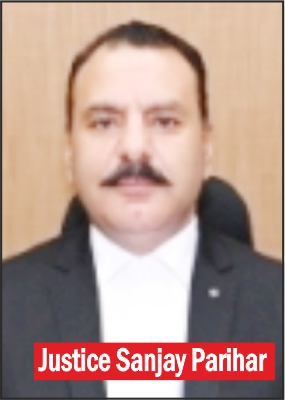
JAMMU, Nov 18: The High Court of Jammu and Kashmir and Ladakh has referred an important legal question concerning the maintainability of revision petitions against Magistrates' orders directing registration of FIRs and police investigations to the Chief Justice for consideration by a larger Bench.
Justice Sanjay Parihar, while dealing with two connected petitions involving senior police officials and a property dispute in Bishnah, observed that conflicting judicial pronouncements on the issue under Section 156(3) of the Code of Criminal Procedure (CrPC) require an authoritative determination.
The Court directed the Registry to place the records of CRM(M) No. 678/2021 and CRM(M) No. 179/2025 before the Chief Justice for appropriate orders regarding the constitution of a larger Bench.
The central legal question is whether an order directing registration of an FIR is an interlocutory order, against which revision is barred under Section 397(2) CrPC, or an intermediate order that can be challenged before a revisional court.
The first petition was filed by then Senior Superintendent of Police Jammu Shridhar Patil (IPS), then Deputy Superintendent of Police, Cyber Crime Police Station, Parupkar Singh, and then SHO Janipur Naresh Kumar, challenging a Magistrate's direction for registration of an FIR against police officials.
The connected petition was filed by Bharat Bhushan and Anuj Sajgotra against Neelam Gorkha in connection with a dispute involving National Medical Hall near Sub-District Hospital, Bishnah. In this matter, the Judicial Magistrate First Class had directed registration of an FIR on June 3, 2024. However, the Additional Sessions Judge, Jammu, dismissed the revision petition on February 28, 2025, holding that such an order was interlocutory and not revisable.
Examining the conflicting legal positions, Justice Parihar referred to the Full Bench judgment of the Allahabad High Court in Father Thomas v. State of Uttar Pradesh, which held that an order under Section 156(3) CrPC directing investigation was interlocutory and could not be challenged through criminal revision by a prospective accused. The Court also noted contrary judicial approaches adopted by other High Courts.
It further referred to its earlier judgment in Satpal Sharma v. Pawan Singh Rathore, wherein a coordinate Bench had held that an order directing registration of an FIR was interlocutory and not amenable to revision.
The Court emphasised that a Magistrate exercising powers under Section 156(3) CrPC must apply judicial mind to the allegations, supporting material and applicable statutory requirements rather than act as a mere forwarding authority.
Justice Parihar observed that registration of an FIR can have serious consequences for an individual, including police investigation, search, seizure and possible arrest, affecting personal liberty, reputation and privacy. However, registration of an FIR does not by itself establish criminal liability or automatically authorise arrest.
On allegations involving public servants, the Court observed that Magistrates must examine the applicability of statutory safeguards, prior approval or sanction requirements, wherever prescribed by law. It clarified that prior sanction is not invariably necessary in every investigation involving a police officer.
Referring to Supreme Court judgments in Amar Nath v. State of Haryana, Madhu Limaye v. State of Maharashtra and Girish Kumar Suneja v. CBI, the Court highlighted the distinction between interlocutory and intermediate orders and the scope of revisional jurisdiction.
The proposed larger Bench will examine six substantial legal questions, including whether orders directing registration of FIRs are necessarily interlocutory, whether they can be challenged on grounds of lack of jurisdiction or non-application of judicial mind, and the extent of revisional interference permissible at different stages of criminal proceedings.
The reference also seeks clarity on the corresponding provisions of the Bharatiya Nagarik Suraksha Sanhita (BNSS), particularly Sections 175(3) and 438(2).
The Court observed that uncertainty over the availability of revisional remedies could lead to inconsistent approaches by subordinate criminal courts, making an authoritative determination necessary.
Deputy Advocate General Pawan Dev Singh appeared for the police officials, while Advocate Arjun Chawla represented Neha Chawla. In the connected matter, Advocate Gagan Oswal appeared for Bharat Bhushan and Anuj Sajgotra, while Advocate Raja Mohit Bucha represented Neelam Gorkha.
The judgment was pronounced on November 17, 2026. The High Court has not finally decided the question of revisability, leaving the issue for authoritative consideration by the proposed larger Bench.
Share This Story |
|
Comment On This Story |
|
|
|
|